Navigating Sales Events: How to Avoid Impulse Buys During Prime Day or Black Friday
Hello, welcome to my website. Want to take full control of your financial future? At Keygenpost (https://www.keygenpost.my.id/), we provide a comprehensive financial literacy guide specifically designed for everyone. Discover practical secrets to managing your personal finances, learn smart steps to start investing, and discover effective strategies for generating stable additional income. Whether you're just starting to learn to save or looking for ways to grow your assets, Keygenpost is ready to be your trusted partner, equipping you with the best financial insights on your path to financial freedom. Happy reading.
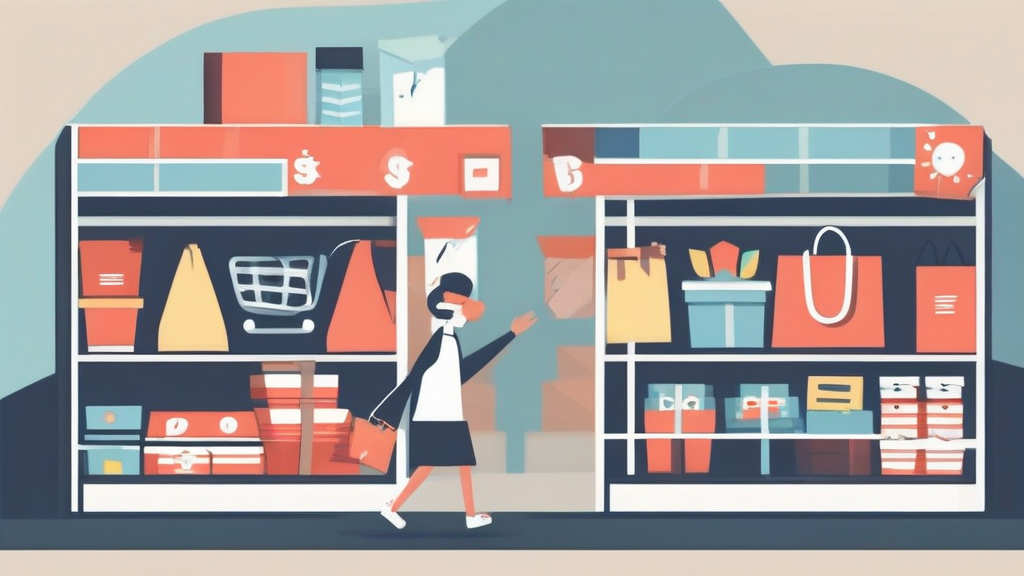
Learning how to avoid impulsive buying during sales is a critical skill for anyone looking to maintain financial health in an era of constant digital notifications. When those red "sale" banners pop up, our brains often bypass logic, shifting into a reactive state that prioritizes immediate gratification over long-term stability.
- Implement a mandatory "cooling-off" period of at least 24 to 72 hours before completing any non-essential purchase.
- Create a strict, itemized shopping list before the event starts to prevent "add-on" syndrome.
- Unsubscribe from promotional emails and disable push notifications from retail apps to eliminate artificial urgency.
The Psychology Behind the "Sale" Trap
Why do we feel such an intense pull to click "buy" when a price is slashed? It comes down to the way our brains process scarcity. Retailers are masters of behavioral economics. They know that by creating a sense of limited time or limited stock, they trigger a fear of missing out, or FOMO.
This isn't just about poor discipline; it is a biological response. When you see a discount, your brain releases dopamine, the same chemical associated with pleasure and reward. You aren't just buying a product; you are chasing the high of the "deal."
Understanding Your Spending Triggers
Most of us have specific triggers that lead to impulse spending. For some, it is boredom. For others, it is stress or even a late-night scrolling habit. Identifying these patterns is the first step toward regaining control.
If you find yourself shopping when you are tired or emotional, you are essentially shopping while impaired. Your executive function—the part of the brain responsible for impulse control—is fatigued. This is exactly when the "three impulse buying traps" occur: the trap of perceived savings, the trap of limited availability, and the trap of social proof.
Strategic Planning: How to Avoid Impulsive Buying During Sales
The best way to win against a retail giant is to never enter the game on their terms. If you go into a sale event without a plan, you are a target. If you go in with a mission, you are a customer.
Start by auditing your needs. Before Prime Day or Black Friday arrives, look around your home. Do you actually need a new blender, or is your current one just a bit dusty? If you do need something, write it down. Be specific. If it isn't on the list, it doesn't go in the cart.
The 24-Hour Rule and Beyond
The "24-hour rule" is a classic for a reason. If you see something that catches your eye, force yourself to walk away. If you are shopping online, leave the item in the cart and close the tab. If you still want the item after a full day, it might be a genuine need.
For larger, more expensive items, consider the "7-day rule." This requires waiting an entire week before finalizing a purchase. This duration allows the initial emotional spike to subside, letting your rational brain catch up to your impulses.
Addressing Common Questions About Impulse Control
People often ask if their shopping habits are tied to underlying conditions. For instance, many people wonder: is impulse buying an ADHD trait? While it is not a diagnostic criterion, people with ADHD often experience difficulty with impulse control due to the way their brains process reward signals. If this resonates with you, it is even more important to build structural barriers between your money and the "buy" button.
Practical Barriers to Impulsive Spending
To truly master your habits, you need to make shopping difficult. Convenience is the enemy of saving. If your credit card information is saved in your browser, you can complete a purchase in seconds. Delete those saved cards. Manually typing in your numbers provides a 30-second window where you might reconsider the purchase.
Another effective strategy is to avoid retail apps entirely. These apps are designed to track your behavior and ping you with personalized offers. If you want to check a price, do it through a browser, not an app that is constantly trying to nudge you toward a transaction.
The Role of Budgeting in Sales Events
Budgeting isn't about restriction; it is about intentionality. When you allocate a specific amount of money to "sale shopping," you are setting a boundary. Once that money is gone, the sale is over for you, regardless of how many deals remain.
Using a separate debit card or a prepaid card for these events can be a game-changer. Load it with your budget and leave your primary credit card in a drawer. This creates a physical limitation that is much harder to ignore than a digital spreadsheet.
Tracking Your Triggers
Keep a "spending journal" for a week. Note down every time you felt the urge to buy something you didn't need. What were you doing? How were you feeling? You might notice that you tend to browse Amazon when you are procrastinating on a work task. Recognizing this pattern allows you to substitute the behavior. Instead of opening a shopping app, open a book or take a walk.
Navigating the Social and Digital Pressure
We live in a culture of consumption. Influencers and social media ads constantly tell us that our lives would be better if we just owned this one thing. Remember that consumerism is a business model. Your dissatisfaction is their profit margin.
If you find that your social media feed is making you feel inadequate or encouraging you to spend, curate your feed. Mute accounts that focus on "haul" videos or constant product reviews. You cannot be tempted by what you do not see.
Conclusion: Taking Back Control
Avoiding impulse buys is not about becoming a hermit who never spends money. It is about shifting your relationship with commerce. It is about deciding that your hard-earned money is better spent on experiences, security, or things that truly add value to your life, rather than cluttering your home with items bought during a moment of weakness.
The next time a massive sale rolls around, remember: the deal is only good if you were going to buy the item anyway. Everything else is just a distraction. Stay focused, stick to your list, and enjoy the peace of mind that comes with keeping your bank account intact.
Frequently Asked Questions
What is the 7-day rule in shopping?
The 7-day rule is a strategy where you wait one full week before purchasing any non-essential item. This waiting period helps you determine if the desire to buy is a genuine need or a fleeting emotional impulse.
What are the three impulse buying traps?
The three main traps are the illusion of savings (buying something just because it is marked down), the fear of missing out (feeling pressured by limited stock or timers), and social proof (buying things because you see others doing so on social media).
Is impulse buying an ADHD trait?
While not a clinical symptom of ADHD, many people with the condition struggle with impulse control. The brain's reward system in ADHD may seek the quick dopamine hit provided by a new purchase, making it harder to resist retail triggers.
Please leave a comment so that I am more enthusiastic about making articles on this website and more enthusiastic about living an incomparable life.
Post a Comment for "Navigating Sales Events: How to Avoid Impulse Buys During Prime Day or Black Friday"