5 Advanced Water Recycling Methods for Your Garden and Lawn
Hello, welcome to my website. Want to take full control of your financial future? At Keygenpost (https://www.keygenpost.my.id/), we provide a comprehensive financial literacy guide specifically designed for everyone. Discover practical secrets to managing your personal finances, learn smart steps to start investing, and discover effective strategies for generating stable additional income. Whether you're just starting to learn to save or looking for ways to grow your assets, Keygenpost is ready to be your trusted partner, equipping you with the best financial insights on your path to financial freedom. Happy reading.
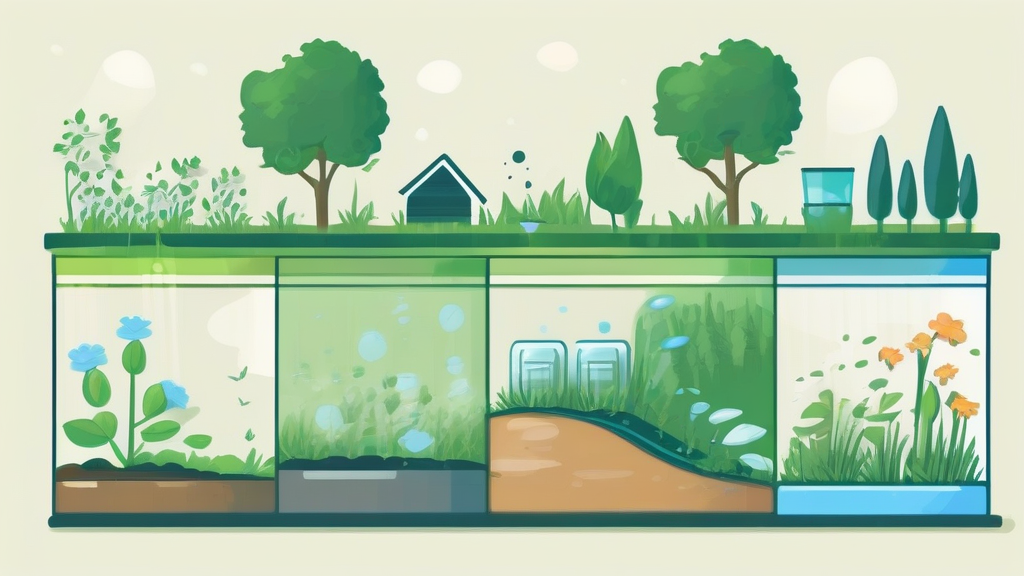
I remember standing on my porch last July, staring at a brown, crunchy lawn while holding a utility bill that made my stomach drop. We often treat water as an infinite resource, but when the monthly costs skyrocket, it becomes clear that we need a better strategy. Implementing tips for saving electricity and water: drastically reduce monthly expenses is not just an environmental choice anymore; it is a financial necessity for every homeowner.
Most of us waste thousands of gallons of perfectly good water every year simply because we do not know how to capture and reuse what we already have. By integrating smart recycling methods into your home landscape, you stop throwing money down the drain. Let’s look at how you can turn your backyard into a self-sustaining ecosystem that keeps your wallet fat and your plants thriving.
1. Graywater Diversion Systems for Irrigation
The most effective way to cut down on your municipal water usage is by tapping into your home’s graywater. This is the gently used water from your bathroom sinks, showers, and laundry machines. Instead of sending it straight to the sewer, a diversion system filters this water and redirects it to your garden beds.
How to Safely Implement Graywater
You must be careful about what soaps and detergents you use. When you switch to biodegradable, plant-friendly products, your shower water becomes a nutrient-rich resource for your shrubs and trees. It is one of the most effective tips for saving electricity and water: drastically reduce monthly expenses because it offsets the need for potable water during the hottest months.
Setting up a basic gravity-fed system is easier than you think. Many homeowners start with a simple hose attachment for their washing machine. However, for a more permanent setup, you might consider a graywater system that filters out lint and particles before distributing the water through a sub-surface drip line.
2. Rainwater Harvesting and Advanced Filtration
Rain is free, yet we let millions of gallons run off our roofs and into storm drains. Installing a rain barrel is a classic move, but if you want to get serious, you need a larger catchment system. By connecting your downspouts to a series of linked barrels or a cistern, you create a private water reserve for your lawn.
Integrating Smart Pumps
If you want to move that water around your garden without breaking your back, consider a small, solar-powered pump. This is where you really see the benefits of tips for saving electricity and water: drastically reduce monthly expenses. You aren't just saving on water; you are using free solar energy to move it, keeping your electricity bill flat even when you increase your irrigation frequency.
Make sure to keep your rainwater harvesting system covered to prevent mosquito breeding. Adding a simple mesh screen at the top of your barrels acts as a filter for leaves and debris, ensuring your irrigation lines don't clog up mid-summer.
3. Condensate Collection from Air Conditioning Units
Did you know your air conditioner is a secret water factory? On a humid summer day, an AC unit can pull several gallons of water out of the air. This water is essentially distilled, making it perfect for sensitive plants that might struggle with the chemicals found in city tap water.
Instead of letting that condensate drip onto your foundation—which can cause structural issues—attach a small tube to the drain line. Lead this tube into a collection bucket or directly into a nearby planter box. It is a subtle, passive way to keep your garden hydrated without turning on the hose.
4. The Power of Sub-Surface Drip Irrigation
Sprinklers are notoriously inefficient. Much of the water they spray evaporates before it even hits the soil, especially in windy or high-heat conditions. When you switch to sub-surface drip irrigation, you deliver water directly to the root zone, which is exactly where the plant needs it.
This method drastically lowers evaporation rates. When you combine this with a smart controller that monitors soil moisture, you ensure that you only water when necessary. This is a cornerstone of my favorite tips for saving electricity and water: drastically reduce monthly expenses, as it prevents the over-watering that leads to both high bills and root rot.
5. Utilizing Hydro-Zoning for Maximum Efficiency
Not every plant in your garden needs the same amount of water. Hydro-zoning is the practice of grouping plants with similar water needs together. By placing your thirsty vegetables in one zone and your drought-tolerant native plants in another, you can manage your water distribution with surgical precision.
Designing Your Zones
You can create a "dry zone" in your garden that relies solely on rainfall and perhaps the overflow from your condensate collection system. This creates a resilient landscape that survives even if you forget to water for a few days. It is a smart, low-maintenance design choice that pays off over the long term.
When you map out your garden this way, you reduce the complexity of your irrigation system. Fewer pipes, fewer leaks, and less time spent troubleshooting. It is a professional-grade approach that turns your hobby into a high-performance system.
Why These Methods Work Together
You might wonder if you need to do all five of these things to see a difference. You don't. Start with one, like the rain barrel, and build from there. The goal is to create a closed-loop system where your garden feeds off the resources your home already produces.
Think about the long-term impact. Every gallon of water you catch or recycle is a gallon you don't pay for. Every hour you avoid running the municipal sprinkler is an hour you save on electricity for your pump system. These tips for saving electricity and water: drastically reduce monthly expenses accumulate over time, turning your garden from a budget drain into a source of pride and savings.
Final Thoughts on Sustainable Gardening
Changing how we manage our lawns doesn't happen overnight. It requires a bit of manual labor, some creative plumbing, and a shift in perspective. But once you see that first rain barrel fill up or watch your garden thrive on recycled shower water, you’ll never look at a utility bill the same way again.
Take the first step today by auditing your current water usage. Identify where you are losing the most, choose one of these methods to address it, and watch your monthly expenses trend downward. Your lawn will look better, your plants will be healthier, and your wallet will certainly thank you for the effort. Sustainable living is not just about big gestures; it is about these small, consistent changes that add up to a much larger impact.
Please leave a comment so that I am more enthusiastic about making articles on this website and more enthusiastic about living an incomparable life.
Post a Comment for "5 Advanced Water Recycling Methods for Your Garden and Lawn"